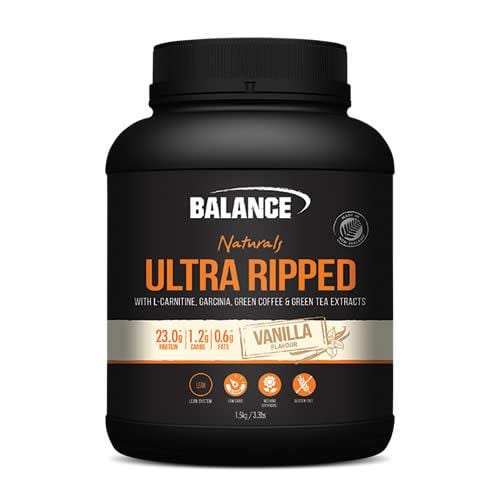
Looking for a good fat loss protein? Wit the supplement market so competitive and the number of brands available, it can be quite overwhelming. To make life easier, why not choose a high quality local product packed full of high quality ingredients? We present you, Balance Ultra Ripped Protein.
Ultra Ripped Ingredients
Unlike many other fat loss proteins, Ultra Ripped uses only whey protein isolates (WPI) as the sole protein source. This breaks the tradition of using protein blends that are both cheaper and also less pure. Not only that, but the proteins used in Balance products come from New Zealand’s own excellent dairy sources, which are world famous for quality. Other than the high quality protein, Ultra Ripped has a range of fat/carb burning and metabolising ingredients such as green tea extract, caffeine, L-carnitine, hydroxycitric acid, chromium, choline, and inositol.
Ultra Ripped Effectiveness
Ultra Ripped is an extremely effective fat loss protein powder. First of all, its protein content is very high, thanks to the use of whey protein isolates. This allows for maximum protein and minimum fat and carbs per serve. In each 30 g serve, you get 110 calories from 25.1 g protein, and only 0.4 g fat, and 0.7 g carbs. Such an impressive protein content helps you feel fuller for longer, while also preserving muscle mass to maintain high metabolism during periods of fat loss. In addition to this, the generous doses of fat loss ingredients help further to burn additional fat when combined with diet and exercise.
Ultra Ripped Taste & Mixabilty
Ultra Ripped is instantised so it mixes very easily without any clumping. It comes in a three different flavours (chocolate, vanilla, and cookies & cream). The shake has a slightly thick consistency, and tastes great.
Ultra Ripped Benefits
The quality of Balance products are difficult to match. The team at Balance provide highly detailed documentation regarding their manufacturing processes, which is something that certainly deserves showing off. They have impeccable quality control and assurance and are certified with the New Zealand Food Safety Authority and Medsafe. Such stringent quality control processes makes sure that you, the consumer, gets the very best.
Ultra Ripped Negatives
It is hard to find criticisms for such a solid product. Really, the only potential downside to Ultra Ripped is that although it is fortified with vitamins and minerals, the levels are quite low. This is just something to be mindful of if you intend on regularly using this product as a meal replacement.
Ultra Ripped Verdict
If you are looking for a high quality fat loss protein powder made from premium New Zealand dairy protein, then Balance Ultra Ripped Protein is the product to go for. Not only does it have an excellent nutritional profile and ingredients, but it also is a fantastic tasting and good value for money supplement. Recommended!
Most people assume hydration drinks work because of electrolytes. While sodium, potassium, and magnesium are important, they’re not the whole story. In fact, the speed at which electrolyte drinks hydrate you depends heavily on carbohydrate concentration and how it affects fluid absorption in the gut.
A small amount of carbohydrate, at the right concentration, can significantly increase how quickly fluids move from your digestive system into your bloodstream. This principle is so reliable that it’s used in medical oral rehydration therapy in hospitals.
But hydration formulas vary widely. For many reasons, some electrolyte drinks contain no carbohydrate at all, others contain too much, and some use specialized carbohydrate sources designed specifically for endurance athletes.
Understanding these differences can help you choose the right hydration strategy for your training environment, intensity, and goals.
New to electrolytes and want to learn the basics first? Check out our blog: Electrolyte Supplements Explained: Benefits, Science & How to Choose the Right Formula
Browse while you read by exploring our Electrolyte Supplement Collection
Why Water Alone Doesn’t Always Hydrate Well During Exercise
Lets start with water on its own. Water is essential for life, but during exercise it isn’t always the most efficient way to rehydrate.
When you sweat, you lose both:
Water
Electrolytes (especially sodium)
If you sweat lots and replace only water, two things can happen:
Blood sodium levels become diluted.
The body may increase urine production, reducing fluid retention.
This is why athletes drinking only water during long sessions often find themselves:
Needing to drink large volumes
Urinating frequently
Still feeling thirsty
That’s where electrolytes come in. Electrolytes help retain the fluid you drink, while small amounts of carbohydrate can accelerate absorption.
Note that there is a key difference between fluid retention and fluid absorption, more on this later in the blog.
Together, electrolytes and carbohydrates combined create a much more efficient hydration system than water alone. This is one reason properly formulated electrolyte drinks can hydrate faster than water during exercise, particularly when they contain the right balance of sodium and carbohydrate.
Why Electrolytes Alone Still Help Hydration
Before we talk about carbohydrates, it’s important to clarify something:
Zero-carb electrolytes can still improve hydration. Electrolytes, especially sodium, help your body retain water. When sodium levels increase in the bloodstream, the body tends to hold onto fluid rather than excreting it quickly through urine.
This helps maintain:
Blood plasma volume – a decrease in blood plasma volume causes your blood to be thicker and harder to pump around the body, resulting in an increase in heart rate and perceived effort.
Fluid balance – when fluid balance drops, you feel thirstier, more fatigued, and your endurance and power output can decline as dehydration begins to affect performance.
Thermoregulation during exercise – poor hydration makes it harder for your body to dissipate heat, causing you to overheat faster, feel drained earlier, and struggle to maintain pace or intensity.
Muscle and nerve function – inadequate electrolyte levels can disrupt nerve signalling and muscle contractions, increasing the likelihood of cramps, weakness, and reduced coordination during exercise.
This is why electrolyte supplements can still improve hydration even without carbohydrates, they still contribute to deterring the negative effects listed above.
Zero-carb electrolyte formulas can be useful when:
Water retention is the primary goal
Exercise intensity is moderate
You’re training in hot environments
You want to avoid extra calories
However, while electrolytes help your body retain fluids, they don’t maximize the speed of absorption.
That’s where carbohydrate enters the picture.
The Sodium + Glucose Hydration Mechanism
Inside the lining of your small intestine is a transport protein called SGLT1 (Sodium-Glucose Linked Transporter 1).
Its role is simple: It pulls glucose and sodium into intestinal cells together. When this happens, water follows automatically via osmotic pressure.
Think of it like a hydration conveyor belt:
Glucose + Sodium → Pulled into intestinal cells → Water follows
This mechanism dramatically improves how efficiently fluid moves from your gut into circulation.
Without glucose present:
Sodium absorption slows
Water absorption slows
With a small amount of glucose present:
Sodium transport increases
Water follows faster
This is the same physiological principle used in hospital oral rehydration solutions to treat dehydration.
The Hydration Sweet Spot: 2–6% Carbohydrate (Hypotonic)
While glucose helps hydration, the concentration matters.
Research consistently shows the optimal range for fluid absorption is roughly 2–6% carbohydrate.
That equals 20–60 grams of carbohydrate per litre of fluid.
Carbohydrate Level
Carbs per Litre
Effect
0%
0g
Hydration can improve from electrolytes
2-6%
20-60g
Fastest fluid absorption
8-10%+
80g+
Slower digestion and risk of GI distress
Within the 2–6% range, drinks remain light enough to move quickly through the stomach while still activating the glucose-sodium transport system.
This combination allows rapid delivery of fluid into circulation.
This is why mixing your electrolyte powder with the recommended amount of water matters. It creates the correct carbohydrate concentration for efficient hydration. Many sports hydration drinks are designed within this carbohydrate range, allowing them to hydrate faster than plain water while still supporting performance during exercise.
When Carbohydrate Levels Get Too High
Some hydration formulas sports drinks contain 8–12% carbohydrate solutions. These are generally intended to be used when carbohydrate intake is the priority, such as doing long-duration high intensity exercise in cool temperatures where carbs are being used, but sweat rates are relatively low.
However, when a formula reaches an 8–12% carbohydrate solution, digestion slows.
High-carbohydrate drinks can:
Slow gastric emptying
Increase GI discomfort
Cause bloating or stomach sloshing
Delay fluid absorption
Instead of hydrating efficiently, the body has to process the carbohydrate load first. But this doesn’t mean higher-carb drinks are bad, they simply serve a different purpose: energy delivery.
Worth noting is that in very concentrated drinks, the high carbohydrate content can pull water into the small intestine so the body can dilute the mixture before absorbing it. During exercise, this can temporarily slow how much fluid reaches your bloodstream, which may temporarily worsen or delay rehydration. If you use a hydration supplement and often struggle with GI distress and dehydration, check to make sure you’re using the correct powder to water ratio, or try a different powder with slightly less carbohydrates.
How Cluster Dextrin Changes the Equation
Some modern endurance drink mixes use Cluster Dextrin® (Highly Branched Cyclic Dextrin) as their primary carbohydrate source.
Cluster dextrin has a much lower osmolality compared with traditional carbohydrate sources like glucose or maltodextrin. This allows drinks to deliver high amounts of carbohydrate while still emptying from the stomach relatively quickly.
For endurance athletes, this can provide several advantages:
Faster gastric emptying compared with many traditional high-carb drinks
Reduced risk of GI discomfort during long sessions or races
More stable energy delivery without large blood sugar spikes
The ability to consume higher carbohydrate amounts through fluids
This is why some premium race-focused formulas can deliver 60–90g+ of carbohydrates per serving while still remaining tolerable for many athletes.
These formulas are often used in:
Endurance cycling
Marathon running
Triathlon
Ultra-distance events
However, even with improved carbohydrate sources, very high-carbohydrate drinks are still designed primarily for fueling rather than hydration.
For everyday training or hydration-focused use, lower carbohydrate electrolyte formulas typically provide faster fluid absorption and better hydration efficiency.
What Is an Isotonic Drink?
Hydration drinks are often categorized based on tonicity, which describes the concentration of dissolved particles relative to blood.
Type
Description
Carb Level
Primary Use
Hypotonic
Lower concentration than blood
0-6%
Fast hydration
Isotonic
Similar concentration to blood
~6-8%
Hydration + energy
Hypertonic
Higher concentration than blood
8%+
Energy delivery
You may also hear the term osmolarity, which refers to the total number of dissolved particles in a solution. In practice, both tonicity and osmolarity influence how quickly fluids move across intestinal membranes.
Isotonic drinks sit in the middle of the hydration spectrum. They provide meaningful carbohydrate energy while still delivering fluids relatively efficiently.
They are particularly useful when:
Exercise lasts longer than 90 minutes
Carbohydrate intake becomes important
Training occurs in cooler environments
Athletes need steady fuel delivery
In cooler conditions, sweat loss is often lower, so the priority can shift slightly toward energy supply rather than maximum hydration speed.
How Food and Energy Gels Affect the Tonicity of Your Sports Drink
One factor often overlooked in hydration planning is what else you consume during exercise. Even if your sports drink is perfectly formulated, adding gels, chews, or solid food changes the concentration of carbohydrates in your stomach. Your digestive system sees one combined mixture, not separate sources of fuel and fluid.
For example:
Intake Example
Result
3-4% carb drink
Fast hydration
Isotonic drink
Balanced hydration + energy
Isotonic drink + gel
Higher carbohydrate concerntation
Isotonic drink + multiple gels
Potentially hypertonic mixture, GI distress
*Assuming all consumed within a 45-90 min timeframe.
Once that mixture becomes too concentrated, gastric emptying slows and hydration efficiency drops.
Why Gels Recommend Water
Most energy gels suggest: “Consume with water.”
This is because gels are extremely concentrated carbohydrate sources, often 20–30g of carbohydrate in a small packet. Drinking water helps dilute the mixture in your stomach, bringing it closer to an isotonic range that your body can process comfortably. Some gels are formulated to be isotonic and don't require additional water aside from what you would regularly consume.
Without enough water, athletes may experience:
Stomach discomfort
Slower digestion
Reduced fluid absorption
Why Sweat Rate Changes Hydration Needs
Hydration needs vary widely between athletes.
Sweat rates can range from less than 0.5L to over 1.5L per hour, depending on:
Body size
Exercise intensity
Temperature and humidity
Individual physiology
Some athletes also lose significantly more sodium in sweat.
These individuals often benefit from:
Higher electrolyte intake
More structured hydration planning
Drinking regularly rather than relying on thirst
Understanding your sweat rate helps determine whether you need:
Basic electrolyte hydration
Higher sodium formulas
Additional carbohydrate fueling
The Hydration Spectrum
Hydration and fueling exist on a spectrum.
Choosing the right option depends on exercise duration, temperature, and fueling needs.
The Main Takeaway
Hydration isn’t just about drinking water or adding electrolytes. The real key lies in how fluids move through your digestive system.
Key Points
Hydration isn’t just about electrolytes. The concentration of carbohydrates in a drink significantly affects how quickly fluids are absorbed.
Electrolytes help retain fluid, supporting blood plasma volume, thermoregulation, and muscle function during exercise.
Small amounts of carbohydrate (2–6%) accelerate hydration by activating the sodium–glucose transport system (SGLT1) in the intestine.
Too much carbohydrate (8–12%+) can slow hydration, increasing the risk of stomach discomfort and delayed fluid absorption.
High-carbohydrate drinks are primarily designed for fueling, not maximum hydration speed.
Cluster Dextrin® allows higher carbohydrate intake with less GI distress, making it useful for endurance athletes needing large amounts of fuel.
Hydration strategy should match your training conditions, including exercise duration, sweat rate, temperature, and fueling needs.
Understanding how electrolytes, carbohydrate concentration, and drink formulation interact can help you choose the right hydration strategy for both performance and comfort during training and racing.
Need guidance on what electrolyte formula is right for you? Check out our guide: Electrolyte Supplements Explained: Benefits, Science & How to Choose the Right Formula
Ready to Optimize Your Hydration?
If you want hydration formulas designed around proper electrolyte balance and optimal carbohydrate concentration, explore our Electrolyte Collection to find performance hydration solutions built for real training conditions.
Unsure where to start? Check out our blog Top 9 Best Electrolyte Supplements in 2026 for Hydration, Sport & Daily Health
Meal delivery services to boost your healthy lifestyle
Everybody wants to be healthy, eat nutritious food, workout often and maintain ultra organised in their work/personal lives while doing it. In reality, very few people can have it all without a little help!
Meal delivery services have taken off in the last few years to assist busy people that are low on time and struggle to execute healthy lunches and dinners. They are super handy for parents, young professionals or anyone that feels like they don't have the capacity or the skills to whip up meals that will satisfy their tastes or align with their health and fitness goals.
Many of these services are different than we think too, not only catering for bodybuilders who people assume live off the chicken breast, rice and broccoli. They all offer a colourful array of cuisines from pasta, to curry and traditional roasts. A lot of the meals are customisable to fit your personal daily macros or there are general categories to chose from such as 'gaining muscle' or 'losing weight'.
While we can't test every single meal or service to determine who's the most tasty, or has the quickest delivery (very important), we have provided a list of healthy meal delivery services below and compiled information so that you can save some research time and get a feel for which one might be better suited to you.
Hello Fresh
Hello Fresh is a subscription based meal service that sends boxes of fresh ingredients to your door with a set of directions for you to prepare the meals yourself. All the ingredients are pre-portioned so all thats left for you to do is the cooking and assembly at home. They pride themselves on using fresh and seasonal produce so you don't have to question the quality of your meals. Their plans are reasonably customisable with a 'Family Plan', 'Classic Plan' and 'Veggie Plan' being able to feed either 2 or 4 people with a choice of frequency of between 3 and 5 meals per week!
One of Hello Fresh's biggest selling points is that all the shopping is essentially done for you so you don't have to waste time going to the supermarket, freeing up that time for other jobs after work or on the weekends. Because the meals are all pre-planned and portioned you also save a lot of time not having to plan what to have for dinner, you simply do that ahead of time when ordering your boxes. Some of the delicious looking meals include; Parmesan & Mustard - Crusted Chicken, Mushroom & Thyme Risotto and Mexican Beef Tostadas, yum!
Plate Up
Plate Up is a meal delivery service set up by Kiwi celebs Art Green and Matilda Rice who became industry couple-goals since appearing on 'The Bachelor NZ'. They've long been known as healthy living advocates and decided to start this venture together to help people that felt like dinner preparation was another daily chore. Plate Up is based on the Paleo diet which is basically sticking to food that our ancestors ate during the Palaeolithic (hunter/gatherer) times.
Although they follow this Paleo blueprint, the meals provided by Plate Up really do not look like you'd be missing out on anything. These meals, which include Slow Cooked Lamb Shoulder, Coconut Chicken Curry and Italian Meatballs look more fit for a Caveman King then resembling anything Palaeolithic, which is a bonus!
There are subscription based plans for weekly meal boxes or you can even purchase meals individually if you just need dinners for a weekend away or specific days. Because of the high quality ingredients and Paleo diet base, Plate Up is a little more expensive than other meal delivery services.
The Food Company
The Food Company was started by a Kiwi family with many of the struggles we all face in relation to food and lifestyle. They were struggling to balance everyday commitments with being healthy & fit while failing to avoid drive-thru's for easy dinners. This business was born out of a need for nutritious meals that would relieve the stress of daily life and not add to it. There are great options online at The Food Company, including individual meals, weekly meal packs, a weekly Keto Box for people on the ketogenic diet and even an 8 meal Isolation Pack.
The Isolation Meal Pack is an 8 meal bundle that serves as a one-off, instead of being part of a full on subscription plan. This helps people who would love a few days off from the dreaded supermarket trip or are lacking time and motivation to cook as we descend down the levels of lockdown.
The menu is varied and vibrant with options such as Chicken Pad Thai, Herb Crusted Fish and Naked Beef Fajita which are all low carb! They also advertise as a fresh service as opposed to delivering frozen meals, this eases many people minds about the freshness and quality of the products they order.
FED.
Fed is a very diverse meal delivery service. They have some more gourmet and alternative meal options such as 'French Mustard Chicken with baby herbed potatoes' and 'Beef Bourguignon with carrot mash'.
There are a stack of gluten free, dairy free and vegetarian/vegan options available and it even mentions which meals are freezer friendly if you're wanting to bulk order and store meals for alternative nights in the future.
There are several ways to enjoy the meals in plans that cater for different needs and groups. The FED. Family plan allows you to choose meals for two or three nights, the weekly subscription box is fairy self explanatory and the Kids Meal plan offer smaller, simple meals like 'Hidden Vege Bolognese' for fussy young eaters, these kids meals average around $8.95 each.
How to choose the right service for your needs
Now that you have a little more information on some food delivery services, you can align your own vibe and needs with one that that suits you.
The best place to start is meal research. Try ordering a meal from each of your top choices based on how they appeal to you with their backstory and types of food they provide. Pay attention to how long it takes to be delivered, compare price with taste and you'll have a winner based on what your budget and tastebuds say!
It's that time again where we try to think of the perfect gift or gifts for our loved ones. Family, friends, colleauges, gym bros... So we log on to www.sportsfuel.co.nz because we know they only shop at the best supplement store in New Zealand. But my, oh my, the choices! Where do we even start? What would they need? Short of asking the person what supplements they use or want to try, we've put together a holiday gift guide to help you find the perfect gift!
What Are Stimulants?
Stimulants are natural or synthetic substances that enervate or speed up the nervous system. Caffeine is a very well-known stimulant and is often used in dietary supplement products for individuals trying to lose weight and increase muscle mass. Some people are unable to take stimulants due to health concerns like cardiovascular disease. Others find that stimulants make them feel jittery or make it difficult for them to sleep.
What Are Stimulant Free Fat Burners?
Stimulant free fat burners are dietary supplements that are designed to help the body burn stored fat but without using stimulants as active ingredients. These products work by supporting the activities of the metabolism during and after exercise. Some also interfere with the body's absorption of fat from foods, so that stored fat is used in place of dietary fat for vital functions. People use stimulant-free fat burners to enhance the fat-burning benefits of workouts without the risk of side effects that can be caused by stimulants.
Who Can Benefit from Stimulant Free Fat Burners?
Anyone who wishes to burn fat in order to lose weight or gain lean muscle mass could benefit from a fat burner, and stimulant free products are ideal for those who cannot tolerate stimulants or prefer not to add them to their diets. It's important to note that stimulant-free fat burners are formulated to complement the effects of exercise, not take the place of them. In other words, you will still need to maintain your workout routine to enjoy fat loss benefits from any fat burner supplements.